

As global climate change issues become increasingly severe, Carbon Capture, CO₂ Recovery, and Carbon Capture, Utilization, and Storage (CCUS) have become crucial technologies in addressing greenhouse gas emissions. These technologies not only reduce the concentration of CO₂ in the atmosphere but also convert captured CO₂ into valuable by-products or securely store it, helping to achieve carbon reduction goals. This article will introduce common carbon capture technologies and explore their characteristics and applications.
First, let’s provide a basic understanding of Carbon Capture, Utilization, and Storage (CCUS) technology. CCUS works by capturing CO₂ and either storing it or converting it into valuable products, thereby reducing the concentration of greenhouse gases in the atmosphere. The process includes:
.Carbon Capture (CC): Capturing carbon dioxide from industrial processes or flue gases to prevent it from entering the atmosphere.
.Carbon Storage (S): Injecting the captured CO₂ into underground reservoirs, such as deep geological formations, for long-term storage.
.Carbon Utilization (U): Converting the captured CO₂ into valuable products, such as chemicals, fuels, or building materials.
Next, we will focus on the key first step of CCUS—Carbon Capture, including its principles, three main stages, and technological applications.

Carbon capture technology is typically divided into three main stages: capture, transportation, and storage.
The first step of carbon capture is to capture carbon dioxide from the emission source.
.Pre-combustion Capture: This is the most common method of capturing carbon dioxide, suitable for fossil fuels such as coal and natural gas before combustion. This method typically uses chemical solvents (like amine-based chemicals) to absorb the carbon dioxide produced during the combustion process.
.Post-combustion Capture: This method extracts carbon dioxide from the flue gases emitted after combustion, using adsorbents or solvents to separate CO₂.
.Oxy-fuel Combustion Capture: This method burns fuel using pure oxygen instead of air, so the resulting flue gas is mainly water vapor and carbon dioxide, making it easier to separate.
Captured carbon dioxide needs to be compressed and transported to the storage location. The transportation methods can include pipelines, tankers, or trains. Since CO₂ is a gas at normal temperature and pressure, it must be liquefied (through low temperature or high-pressure treatment) to improve transportation efficiency.
Captured carbon dioxide can be stored through the following methods:
.Geological Storage: Injecting carbon dioxide into deep underground rock formations (such as oil and gas fields, coal seams, or salt caverns) for long-term storage. These sites are capable of naturally trapping CO₂, preventing it from returning to the atmosphere.
.Mineral Carbonation: Reacting carbon dioxide with natural minerals to form stable carbonate minerals, achieving permanent storage.
.Ocean Storage: Injecting carbon dioxide into the deep ocean, utilizing the physical and chemical properties of the ocean to store CO₂. However, this method is still in the research and testing phase.
Due to the high selectivity and permeability of membranes for carbon dioxide, they can efficiently separate CO₂ from different gases. The main advantages of this technology are its simplicity of operation and low energy consumption, making it particularly suitable for handling low-temperature, high-pressure, and high-concentration CO₂ waste gases (e.g., flue gases, industrial emissions).
Compared to other technologies, membrane separation systems are easy to maintain and can operate stably for long periods. Additionally, being a physical process rather than a chemical reaction, membrane separation typically does not require high temperature or pressure conditions.
Applicable Scenarios:
.Industrial emissions with high CO₂ concentration in exhaust gases
.Industrial facilities with high energy-saving demands
Adsorption technology captures and fixes CO₂ by utilizing the affinity between adsorbents (such as zeolites, activated carbon, etc.) and CO₂ molecules. This technology operates at lower temperatures and does not require high pressure or chemical reagents, making it suitable for handling low to medium concentration CO₂ exhaust gases.
Its advantages include fast adsorption and desorption processes, and the adsorbents can be reused, reducing operational costs. The technology has a wide range of applications. However, for high-concentration CO₂ gases, the treatment efficiency of adsorption technology may be lower.
Applicable Scenarios:
.Medium to low concentration exhaust gases, such as emissions from power plants or chemical factories
.CO₂ capture in renewable energy facilities
Chemical absorption is one of the mature carbon capture technologies, utilizing amine solutions to chemically react with and fix CO₂. This technology performs excellently when handling low-concentration CO₂ and is suitable for large-scale operations. However, it has the drawback of high energy consumption, as it requires high-temperature desorption of CO₂ and regeneration of the absorbent, which must be replaced periodically, thereby increasing operational costs.
Applicable Scenarios:
.Gas sources with lower CO₂ concentrations (e.g., natural gas, coal-fired power plants)
.Large industrial emission sources
Gas Hydrate Separation Technology utilizes low temperature and high pressure conditions to form hydrates by reacting gas with water, capturing CO₂. It is especially suitable for natural gas treatment or gas sources rich in CO₂, where it can solidify CO₂ at low temperatures.
The main challenge lies in maintaining stable low temperature and high pressure conditions, which places higher demands on the equipment. However, this technology shows significant potential for applications in CO₂-rich gas treatment, particularly in energy extraction and natural gas processing.
Applicable Scenarios:
.Natural gas or CO₂-rich gas sources
.CO₂ capture during energy extraction processes
CO₂ Recovery refers to the process of extracting CO₂ from industrial emissions or other sources and using it to produce products or for other resource utilization applications. Unlike simple carbon capture, CO₂ recovery focuses more on converting the captured CO₂ into usable resources, creating economic value.
.The focus of carbon capture technology is to separate CO₂ with sufficient purity from exhaust gases, creating conditions for subsequent utilization.
.The focus of CO₂ recovery technology is to process and treat the captured CO₂, and use it to create product value or enhance economic benefits.
In simple terms, carbon capture technology is the first step in “carbon reduction,” while recovery technology is the core method for “resource utilization.” The value of recovery lies in transforming captured CO₂ from an environmental burden into an economic opportunity, which is the fundamental difference between the two.
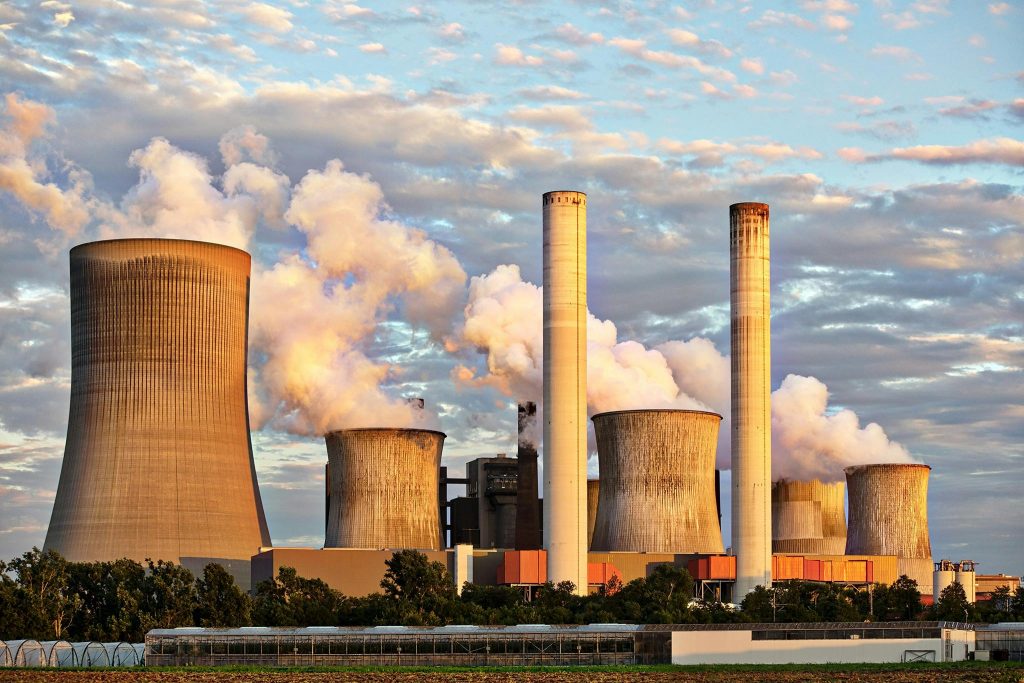
Carbon capture technology is being deployed globally, becoming an important tool in addressing carbon emissions. It helps businesses reduce greenhouse gas emissions and provides technological support for carbon reduction innovations. Below are the application scenarios of carbon capture in key industries:
Coal and gas power plants are key application areas for carbon capture technology, effectively extracting CO₂ from flue gases for sequestration or resource utilization. Additionally, CO₂ captured during the blue hydrogen production process also helps reduce the carbon footprint.
.Cement and Steel Industries: These fundamental industries release large amounts of CO₂ during production. Carbon capture technology helps separate high-concentration CO₂, significantly reducing carbon emissions.
.Chemical Production: In chemical processes, carbon capture extracts CO₂ from by-product gases, which can be used to produce high-value products such as methanol and urea.
.Food Processing: Captured CO₂ can be used in the production of carbonated beverages, frozen foods, and food preservation.
.Agricultural Greenhouses: Injecting CO₂ into greenhouse environments enhances crop growth efficiency and optimizes agricultural production.
With the growing demand for clean fuels, carbon capture is increasingly applied in the production of synthetic fuels, such as extracting methanol or synthesizing ammonia from CO₂, providing low-carbon energy for shipping and aviation.
In enhanced oil recovery (EOR), CO₂ is injected into oil fields to increase oil recovery rates while partially achieving carbon sequestration, meeting the dual goals of energy recovery and carbon reduction.
With technological advancements, the application areas of carbon capture are gradually expanding. For instance, it is used to promote microalgae growth in bioreactors, enabling the production of biofuels or high-value-added products, showcasing diverse potential.
As global attention on carbon emissions intensifies, various carbon capture technologies have specific application scenarios and advantages, playing a critical role within the framework of carbon capture, utilization, and storage (CCUS). In the future, the efficiency of carbon capture will continue to improve, providing strong support for achieving carbon neutrality.