

Photo by Jas Min on Unsplash
As global attention on climate change intensifies, carbon dioxide recovery technology (CO₂ Recovery) is seen as an important solution to reduce greenhouse gas emissions and combat global warming. This technology involves the capture, treatment, recovery, and reuse of CO₂, which not only helps reduce CO₂ concentrations in the atmosphere but also creates new value for businesses. Below is an overview of the complete process of CO₂ recovery technology and its applications.
The first step in CO₂ recovery is capture. This process typically involves technologies such as adsorption, chemical absorption, or gas hydrate separation to extract CO₂ from industrial flue gases, natural gas processing, or other CO₂-containing gases. These technologies rely on different physical and chemical principles to efficiently capture CO₂, thereby reducing its emission into the atmosphere.
The captured CO₂ is typically in a gaseous state, so it needs to be processed through pressurization and cooling to convert it into a liquid form. This process compresses the volume of CO₂, making it more dense and easier to store and transport. Liquefied CO₂ also improves the efficiency of storage and handling, while helping to reduce space requirements.
To ensure the purity of the CO₂, liquefied CO₂ needs to undergo a purification process. This process removes impurities that may have been introduced during the capture stage, such as moisture, sulfur compounds, and others, ensuring that the final recovered CO₂ has a high purity suitable for subsequent utilization or storage.
Finally, the purified CO₂ can be further stored or sequestered. Storage methods include injecting liquid CO₂ into deep underground rock formations (such as oil and gas fields or salt caverns) for permanent sequestration, or using it in other technologies, such as reducing carbon emissions in blue hydrogen production. Additionally, some CO₂ can be converted into valuable products through resource utilization, such as methanol, urea, ethanol, fuels, or polymer materials.
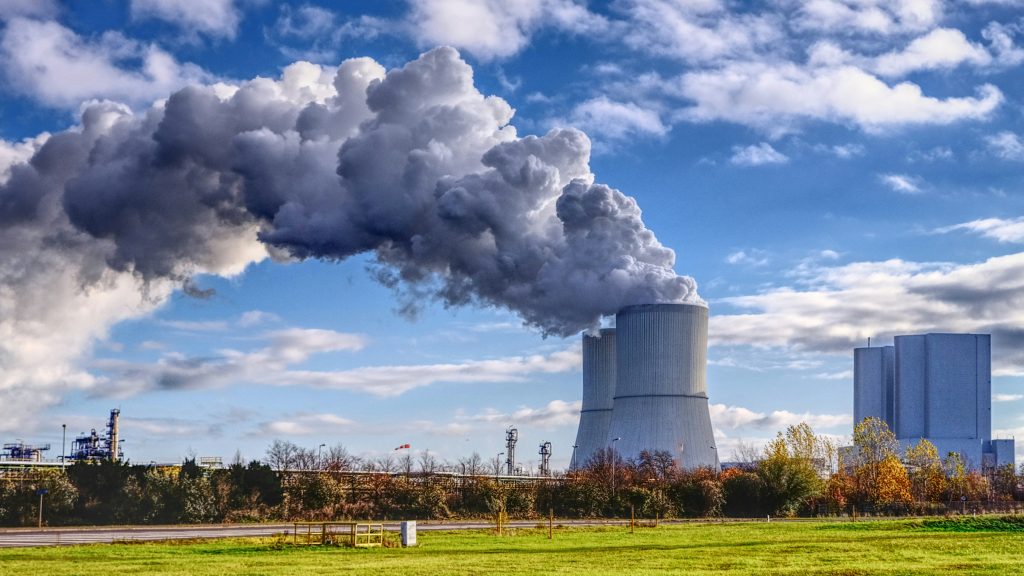
CO₂ recovery technology is currently applied in various fields, particularly in the energy and chemical industries. In high carbon-emitting industries such as power plants, steel mills, and cement incineration plants, CO₂ recovery allows for a significant reduction in carbon emissions. Additionally, CO₂ recovery technology plays an important role in hydrogen production and the manufacturing of carbon-neutral building materials.
Although CO₂ recovery technology is still in the development stage, its application potential is vast, and with the rapid advancements in technology, it is gradually showing a trend toward maturity. In Taiwan, carbon capture, utilization, and storage (CCUS) is gradually taking off. As technological innovations continue to break through, costs are optimized, regulatory systems are improved, and infrastructure progresses, these efforts will strongly support the implementation of the “Greenhouse Gas Reduction and Management Act.” In the future, with strengthened economic incentives and deeper industry collaboration, CO₂ recovery technology will play a crucial role in achieving carbon reduction goals and promoting green economic development.
With advancements in technology and reductions in costs, CO₂ recovery technology is expected to become a key component of future carbon reduction efforts. The Taiwanese government is currently actively promoting clean energy policies, focusing on accelerating the development and commercialization of this technology to help achieve the 2050 net-zero emissions goal.
CO₂ recovery technology not only effectively reduces emissions but also holds the potential for the resource utilization of carbon dioxide, bringing new opportunities and challenges to global climate action.
Taikkiso, Nikkiso’s exclusive agent in Taiwan, leads the transformation towards new energy by offering Nikkiso CE&IG’s hydrogen, ammonia, CO₂ recovery, ORC systems, maritime fuel systems, and comprehensive solution packages for innovative technologies.
Nikkiso and Taikkiso are able to provide a diverse range of CO₂ recovery / liquefaction system solutions, supporting carbon reduction efforts and driving a more sustainable future!